
Polo is an exhilarating team sport played on horseback, combining speed, strategy, and skill. Polo has a rich history dating back over 2000 years and is now played in over 70 countries worldwide. Polo is one of few sports where men and women can compete on equal terms, and is enjoyed by all ages and skill levels.
THE BASICS
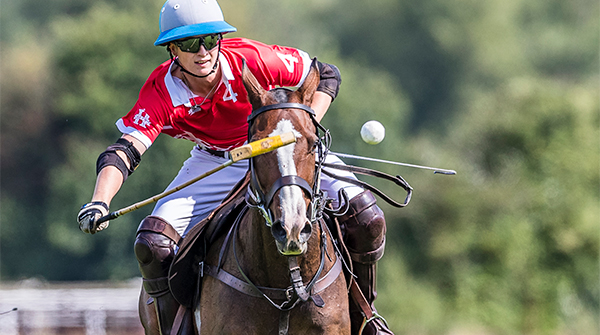
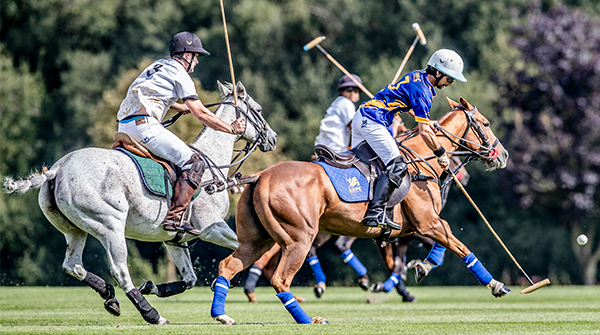
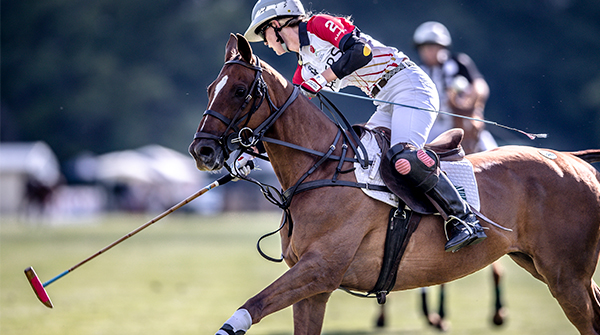
Polo is played on a large grass field during the summer months, or in an enclosed arena (arena polo) during the winter. Two teams compete to hit a small ball through the opponent’s goalposts using a long-handled mallet. The game is divided into periods called “chukkas,” each lasting seven minutes, with between four and six chukkas in a match. Players are mounted on horses known as ‘polo ponies’, and they will play several different ponies during a match to prevent the horses getting tired due to the fast pace of the game.

THE BASICS

Polo is played on a large grass field during the summer months, or in an enclosed arena (arena polo) during the winter. Two teams compete to hit a small ball through the opponent’s goalposts using a long-handled mallet. The game is divided into periods called “chukkas,” each lasting seven minutes, with between four and six chukkas in a match. Players are mounted on horses known as ‘polo ponies’, and they will play several different ponies during a match to prevent the horses getting tired due to the fast pace of the game.

TEAMS & SCORING
A polo team consists of four players in outdoor polo and three players in arena polo. Each player usually has a specific position and role, but can move anywhere on the field during the game.
Number 1 – Attacks and scores goals
Number 2 – A balance of offence and defence
Number 3 – The key strategist and usually the strongest hitter
Number 4 – Defensive player, preventing goals. Often referred to as the ‘back’
Teams score by hitting the ball through the opponent’s goalposts. In outdoor polo, all goals are worth one point, while in arena polo it is possible to score a two-point goal by scoring from behind the 25-yard line.
Teams change ends periodically throughout the game to ensure fairness with wind or field conditions. In outdoor polo, ends change after every goal, but in arena polo ends change after each chukka.
TEAMS & SCORING
A polo team consists of four players in outdoor polo and three players in arena polo. Each player usually has a specific position and role, but can move anywhere on the field during the game.
Number 1 – Attacks and scores goals
Number 2 – A balance of offence and defence
Number 3 – The key strategist and usually the strongest hitter
Number 4 – Defensive player, preventing goals. Often referred to as the ‘back’
Teams score by hitting the ball through the opponent’s goalposts. In outdoor polo, all goals are worth one point, while in arena polo it is possible to score a two-point goal by scoring from behind the 25-yard line.
Teams change ends periodically throughout the game to ensure fairness with wind or field conditions. In outdoor polo, ends change after every goal, but in arena polo ends change after each chukka.
POLO HANDICAPS
Polo players are rated using a handicap system ranging from -2 (beginner) to 10 (world-class professional). A player’s handicap is referred to as ‘goals’, so player may be ‘2 goals’ or a ’10-goaler’. A team’s overall handicap is the sum of its players’ handicaps. A player’s handicap relates to their skill, experience as a player, and value to their team, and is not related to how many goals they might score. Handicaps are decided by a committee at the middle and end of a season and may go up or down depending on the player’s form.
A separate women’s handicap system was introduced in 2015, using the same scale as the mixed game. This rating is only used for women-only polo matches, and was created to better reflect the range of ability among female players, as many were concentrated at the lower handicap levels, leading to significant differences in skill within the same handicap rating.
Tournaments usually have a handicap level (e.g. an 8-goal tournament) meaning that the team handicap must match or be within a given range. Polo is often described as high goal (17-22 and 15-18), medium goal (10-15), and low goal (8 and below) and this refers to the level of the tournament. There are rare tournaments that are played as ‘open’ (e.g. The Argentine Open) and in these matches it is possible to have a 40-goal team, a combination of four 10-goal players.
POLO HANDICAPS
Polo players are rated using a handicap system ranging from -2 (beginner) to 10 (world-class professional). A player’s handicap is referred to as ‘goals’, so player may be ‘2 goals’ or a ’10-goaler’. A team’s overall handicap is the sum of its players’ handicaps. A player’s handicap relates to their skill, experience as a player, and value to their team, and is not related to how many goals they might score. Handicaps are decided by a committee at the middle and end of a season and may go up or down depending on the player’s form.
A separate women’s handicap system was introduced in 2015, using the same scale as the mixed game. This rating is only used for women-only polo matches, and was created to better reflect the range of ability among female players, as many were concentrated at the lower handicap levels, leading to significant differences in skill within the same handicap rating.
Tournaments usually have a handicap level (e.g. an 8-goal tournament) meaning that the team handicap must match or be within a given range. Polo is often described as high goal (17-22 and 15-18), medium goal (10-15), and low goal (8 and below) and this refers to the level of the tournament. There are rare tournaments that are played as ‘open’ (e.g. The Argentine Open) and in these matches it is possible to have a 40-goal team, a combination of four 10-goal players.
POLO PONIES
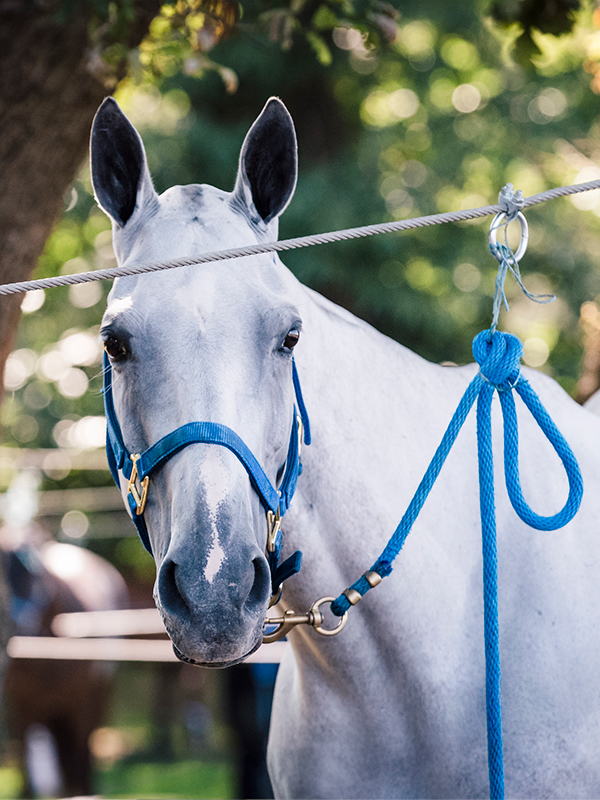
Polo ponies are highly trained horses known for their speed, athleticism, and agility. Popular breeds include Thoroughbreds, Quarter Horses, and Argentine Polo Ponies (Polo Argentino) or their crosses, but horses of all shapes and sizes play polo at the lower levels. The term ‘polo pony’ refers to the original height limit of 14 hands, which was abolished after WW1; horses are now usually between 14.3-15.3 hands, but the name ‘polo pony’ has remained.
Horses playing at the higher levels will be polo specialists, bred and trained for their polo careers. At the lower levels, many horses combine polo with other disciplines and can be found jumping, eventing, and doing dressage off the pitch, while in junior polo, many ponies perform a range of Pony Club activities.
Many horses enjoy long careers in polo, playing into their late teens or early twenties, but those who retire or are not suited for polo often find careers in other disciplines, from happy hackers to high level competition. There are also a huge numbers of retrained racehorses in polo, finding a second career on the polo field.
TEAMS & SCORING
Polo ponies are highly trained horses known for their speed, athleticism, and agility. Popular breeds include Thoroughbreds, Quarter Horses, and Argentine Polo Ponies (Polo Argentino) or their crosses, but horses of all shapes and sizes play polo at the lower levels. The term ‘polo pony’ refers to the original height limit of 14 hands, which was abolished after WW1; horses are now usually between 14.3-15.3 hands, but the name ‘polo pony’ has remained.
Horses playing at the higher levels will be polo specialists, bred and trained for their polo careers. At the lower levels, many horses combine polo with other disciplines and can be found jumping, eventing, and doing dressage off the pitch, while in junior polo, many ponies perform a range of Pony Club activities.
Many horses enjoy long careers in polo, playing into their late teens or early twenties, but those who retire or are not suited for polo often find careers in other disciplines, from happy hackers to high level competition. There are also a huge numbers of retrained racehorses in polo, finding a second career on the polo field.


The HURLINGHAM POLO ASSOCIATION
In 1903, the Hurlingham Polo Committee expanded to include representatives from the Services, the County Polo Association, the three London polo clubs – Hurlingham, Ranelagh, and Roehampton – and from all associations within the Empire. In 1925, the Committee was renamed and the Hurlingham Polo Association was born.
As polo’s popularity spread worldwide, the HPA’s influence transcended national borders. The association played an instrumental role in nurturing polo communities in countries such as Argentina, the United States, and Australia. By providing guidance and support, the HPA contributed significantly to the growth of the sport on an international scale.
The Hurlingham Polo Association’s enduring legacy is a testament to its unwavering dedication to the sport of polo. From its inception in 1875 to its current role as a global authority, the HPA has been instrumental in shaping polo into the dynamic and competitive sport we know today. As polo continues to captivate enthusiasts around the world, the HPA remains at the forefront, steadfast in its mission to uphold the traditions and values of this remarkable equestrian pursuit. The association continues to evolve, adapting to the changing landscape of the sport through initiatives focused on player development, pony welfare, and safety. Its commitment to maintaining the highest standards ensures that polo remains a dynamic and thriving sport.
The HURLINGHAM POLO ASSOCIATION
In 1903, the Hurlingham Polo Committee expanded to include representatives from the Services, the County Polo Association, the three London polo clubs – Hurlingham, Ranelagh, and Roehampton – and from all associations within the Empire. In 1925, the Committee was renamed and the Hurlingham Polo Association was born.
As polo’s popularity spread worldwide, the HPA’s influence transcended national borders. The association played an instrumental role in nurturing polo communities in countries such as Argentina, the United States, and Australia. By providing guidance and support, the HPA contributed significantly to the growth of the sport on an international scale.
The Hurlingham Polo Association’s enduring legacy is a testament to its unwavering dedication to the sport of polo. From its inception in 1875 to its current role as a global authority, the HPA has been instrumental in shaping polo into the dynamic and competitive sport we know today. As polo continues to captivate enthusiasts around the world, the HPA remains at the forefront, steadfast in its mission to uphold the traditions and values of this remarkable equestrian pursuit. The association continues to evolve, adapting to the changing landscape of the sport through initiatives focused on player development, pony welfare, and safety. Its commitment to maintaining the highest standards ensures that polo remains a dynamic and thriving sport.
HPA LATEST NEWS
Notice of a Result of a Disciplinary Sanction Meeting
The HPA has released the result of a Disciplinary [...]
Statement: 11 September Incident
Following the incident during a match at Cowdray Park [...]
Statement: Harry Revell
The HPA is deeply saddened to confirm the [...]